Basements Fail Differently Than Garages
A garage floor fails from the top down, hot tires and dropped tools. A basement fails from the bottom up. Water vapor moves through the slab from the soil underneath, pushes on whatever is bonded to the surface, and lifts it. That is why so many basement coatings bubble and peel a year in while the same product does fine in a garage.
Which is why I test for it before I quote a system, not after I install one. If the slab is driving moisture, the answer is a bonded vapor barrier underneath the coating, not a thicker topcoat and crossed fingers.
Why Coat a Basement Floor
- It survives water, if the basement takes on water again, you squeegee it and move on instead of tearing out flooring and paying for mold remediation
- Nothing to trap moisture, carpet pad and floating floors hold water against the slab. A bonded coating has nowhere for water to hide underneath it
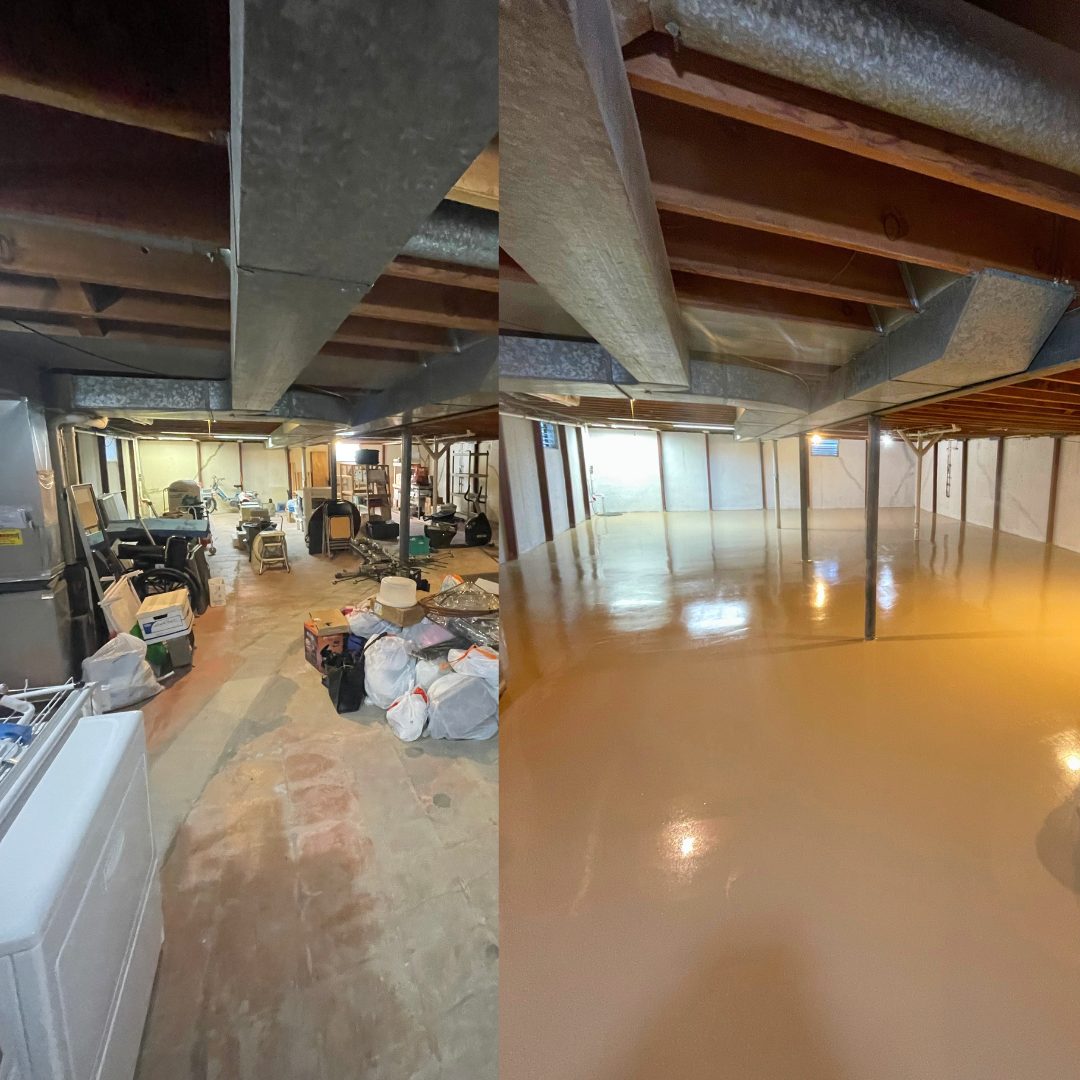
- You get the square footage back, a finished floor turns storage space into usable space without framing, subfloor, or a ceiling
- Brighter down there, a light flake finish reflects what little light a basement gets and makes the whole level feel less like a cellar
- Easy to keep clean, dust, pet accidents, and spills wipe off a sealed floor instead of soaking into bare concrete
How I Do a Basement
Basements get one extra step that garages do not, and it is the step that decides whether the floor is still down in five years:
- Test the slab for moisture Before I quote a system I check whether vapor is moving up through the concrete. This drives the entire recommendation. Skipping it is how installers end up back at your house arguing about a bubbled floor.
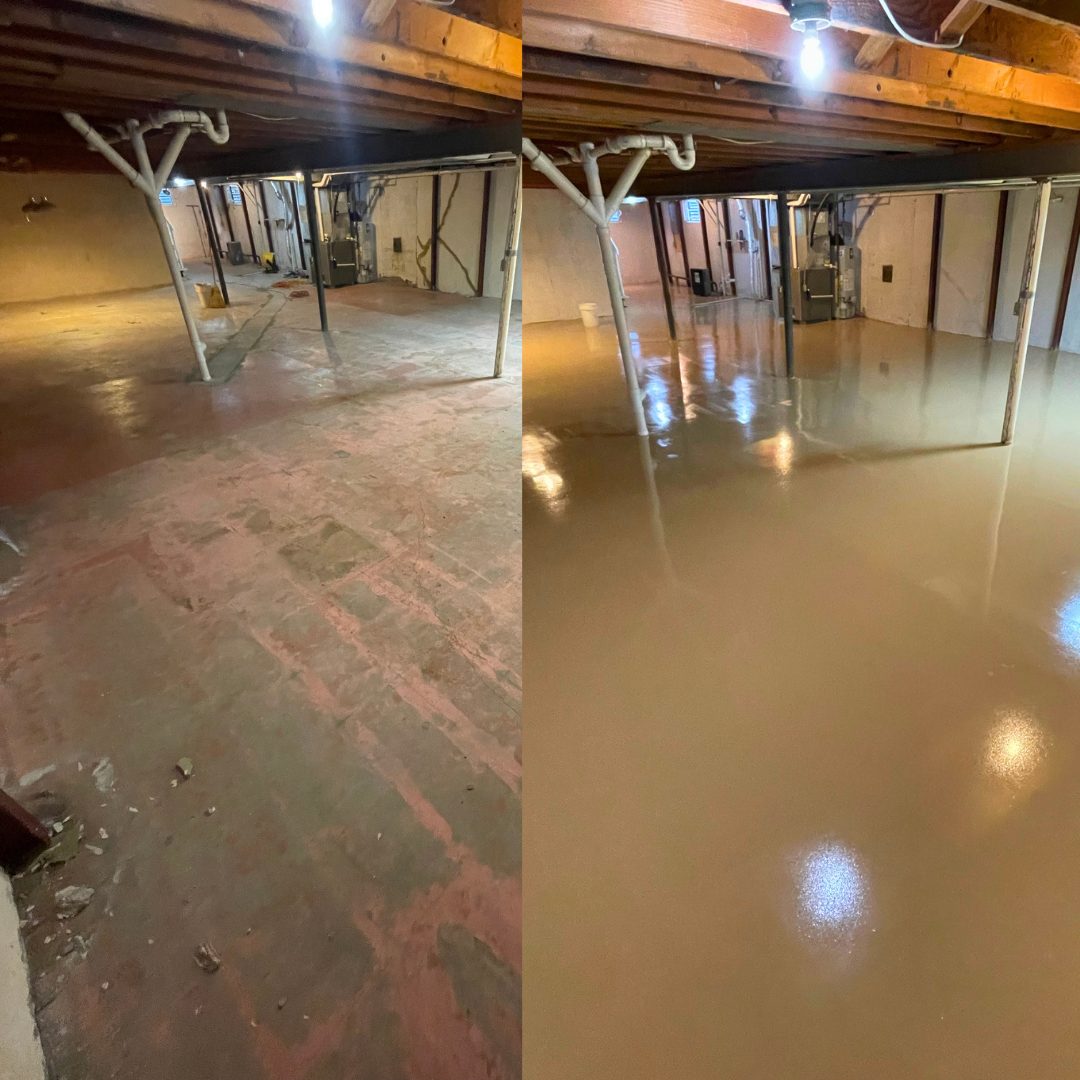
- Diamond grind the whole slab The concrete gets mechanically ground to an open profile so the system bonds into it. Old paint, glue, carpet adhesive and failed coatings come off here. HEPA vacuums run the whole time so your house is livable.
- Repair and prep Cracks, chips, spalling and pits get filled and worked flat so there is nothing for the coating to fail over.
- Bond a moisture barrier if the slab needs one When testing says the slab is driving vapor, a moisture barrier goes down first and bonds to the concrete. This is the difference between a coating that holds and one that lifts.
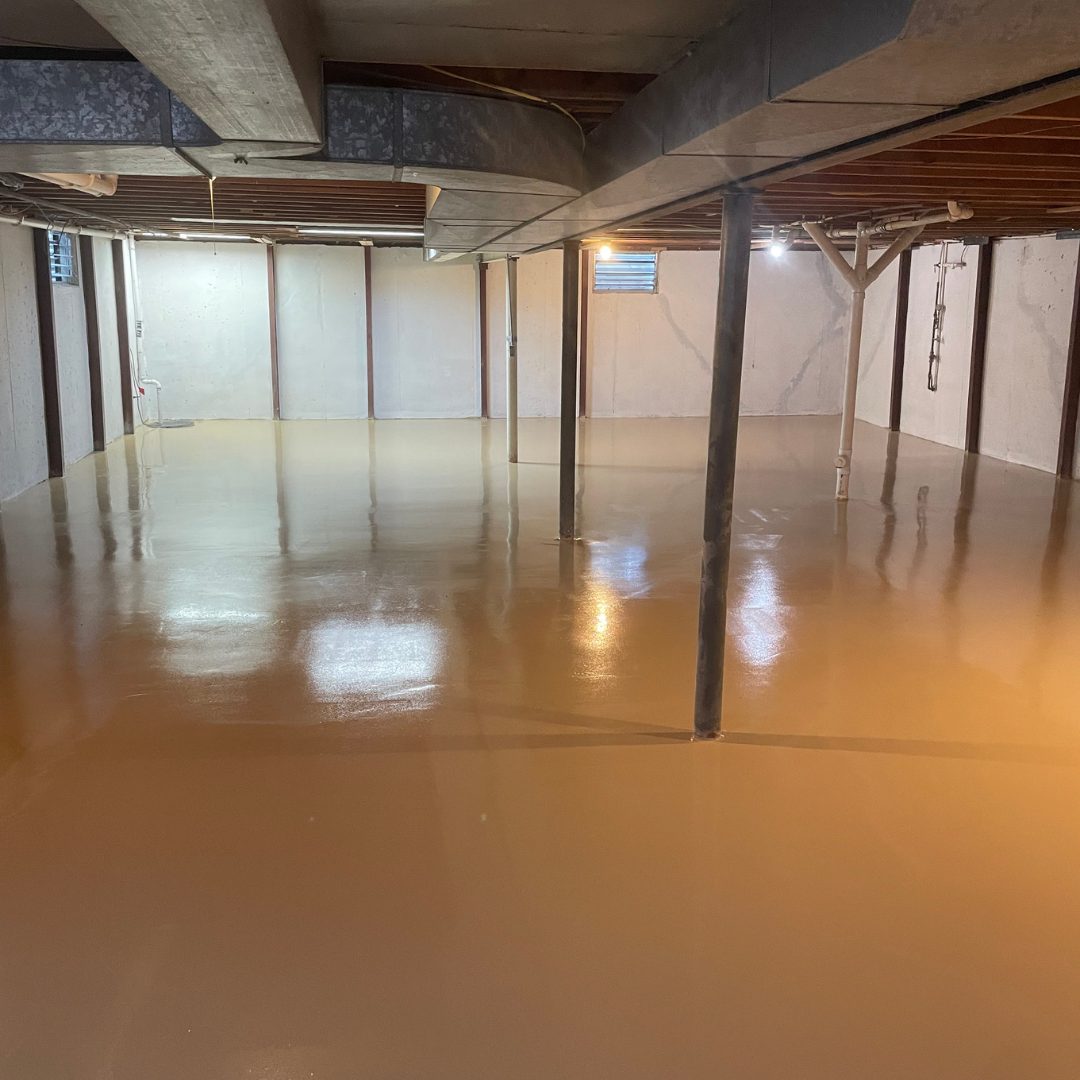
- Base coat, flake, topcoat Epoxy base across the floor, flake broadcast into it, then a clear topcoat that seals everything in and gives you the surface you actually live on.
Finished basements
Living space, rec rooms, home gyms and offices. A floor you can put furniture on that will not be ruined by one bad night.
Unfinished storage
Utility rooms, storage, mechanical space. Sealed, bright and dust-free instead of raw gray slab shedding on everything.
Basements that have flooded
This is the situation coatings were made for. If it has happened once it can happen again, and the flooring choice should assume it will.
Walkout and daylight levels
Slabs at or near grade, where moisture and freeze-thaw are both in play.
What I Will Tell You Before You Hire Me
Basement coatings have a reputation for failing, and it is earned. Almost every failure I get called out to look at comes down to the same thing: nobody tested the slab for moisture, so the system went down over a floor that was actively pushing water into it.
I would rather test your slab and tell you it needs a barrier, or that it is not a good candidate at all, than take the job and be back in a year. Here is what else you should know going in.
A barrier is not optional if the slab needs one
If testing says vapor is moving, skipping the barrier to save money is how you buy the floor twice. I will price both so you can see the difference, but I will not install a system I expect to fail.
It does not fix a water problem
A coating handles water that lands on the floor. It does not stop water getting in. If you have an active leak, a bad grade, or a failing drain, fix that first or the floor is a bandage.
Cracks can come back
Slabs move. I fill cracks as part of prep, but I cannot promise a filled crack never shows again, because the concrete underneath is still going to do what it does.
Two days, sometimes three
Grinding, prep and coating do not compress into an afternoon. You will hear the real schedule before I start.