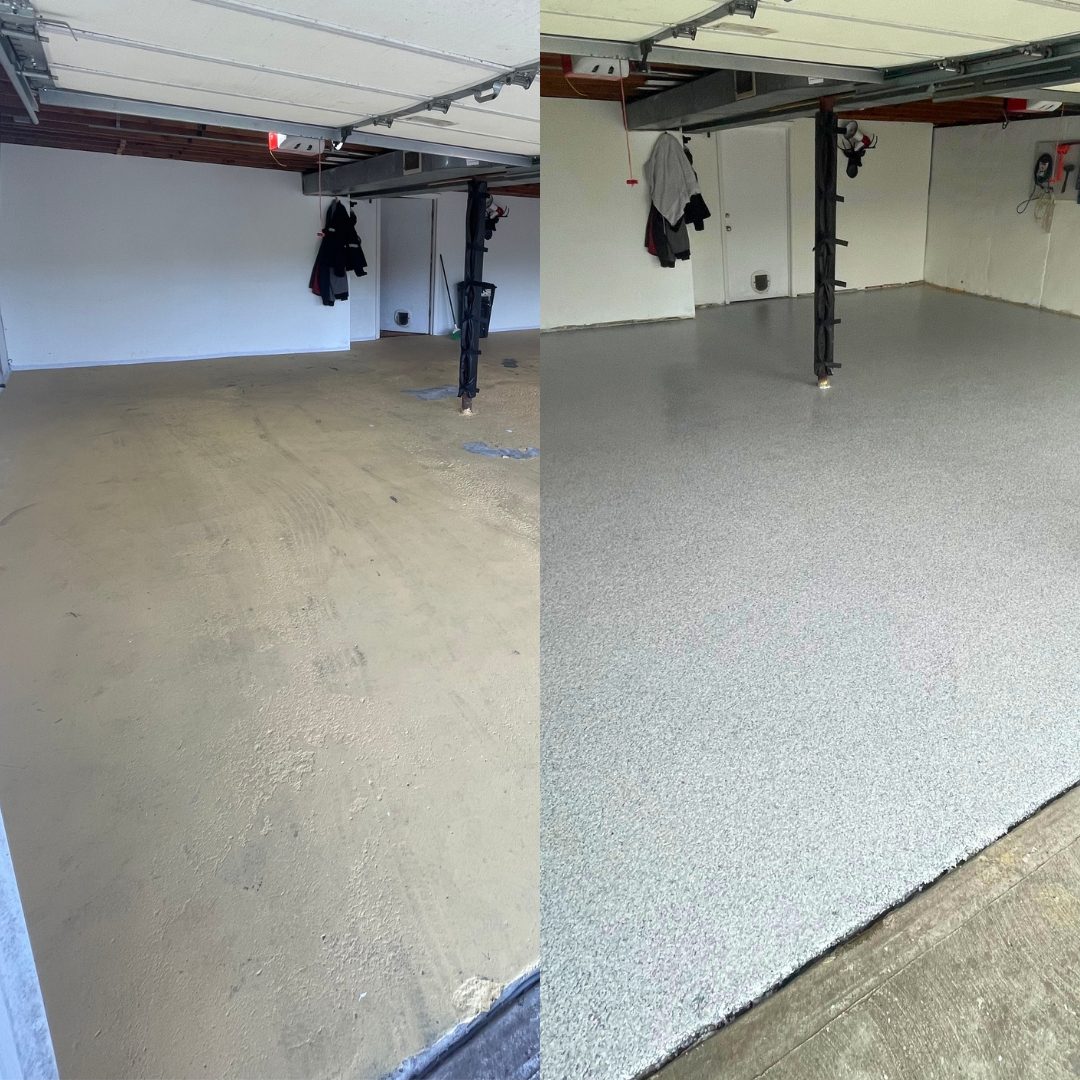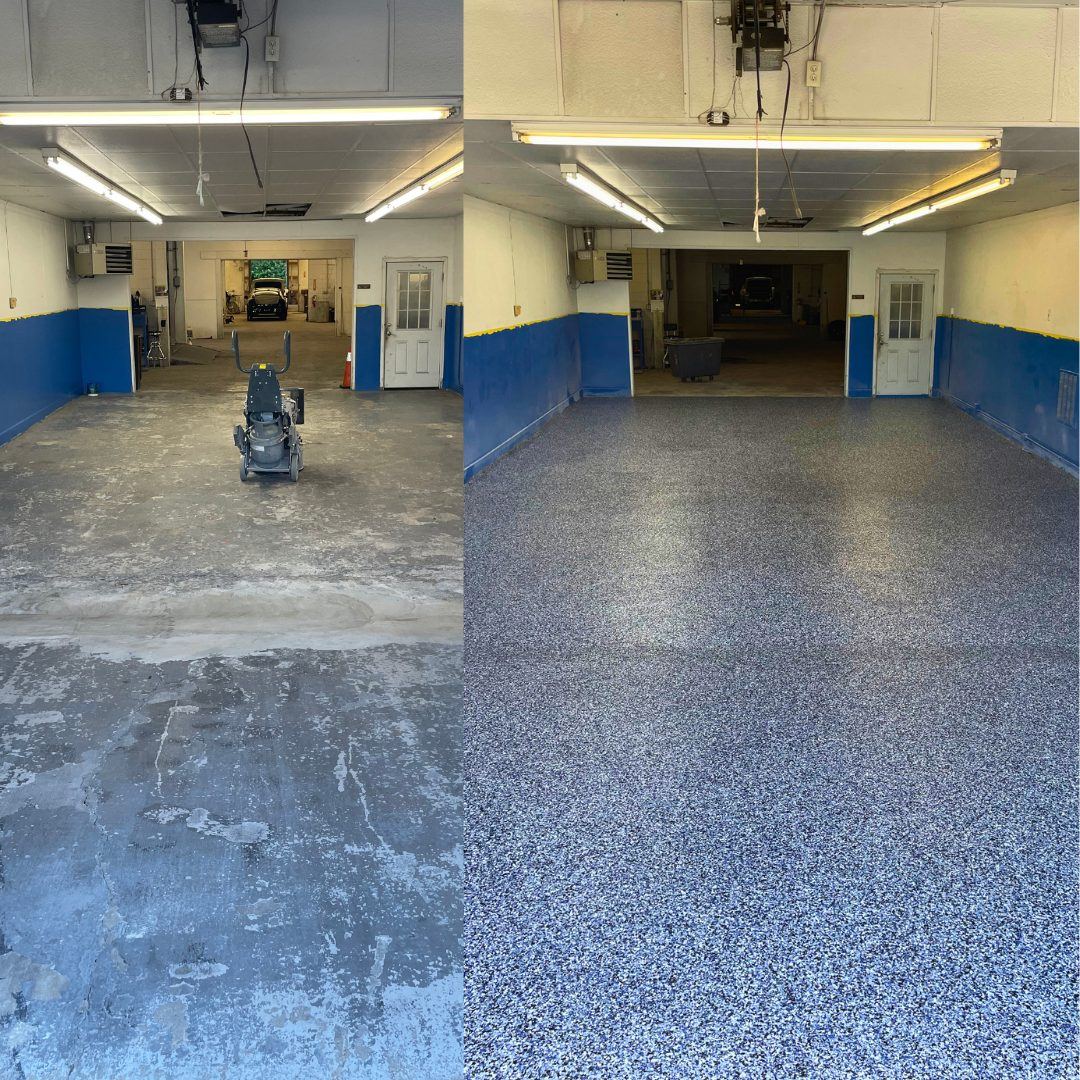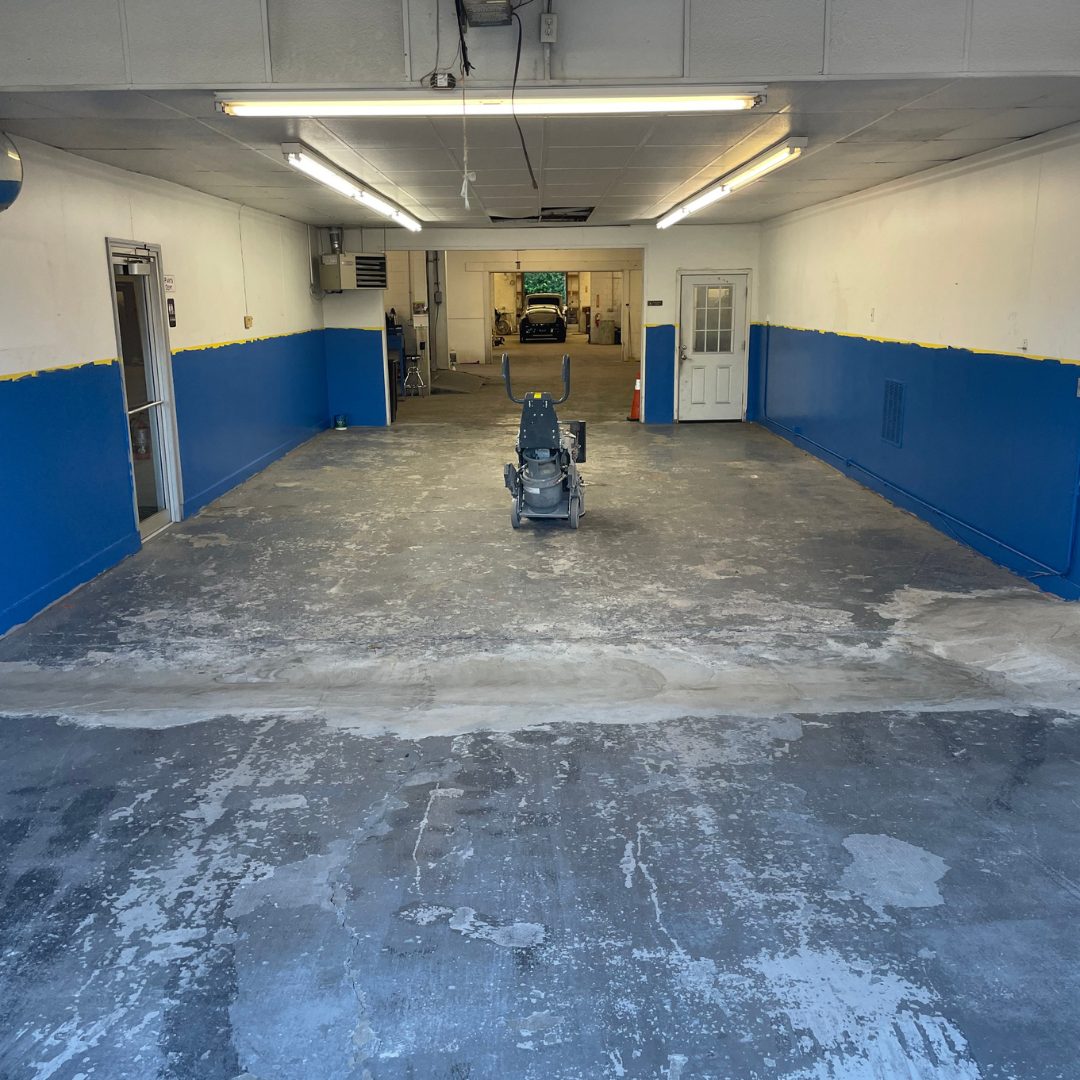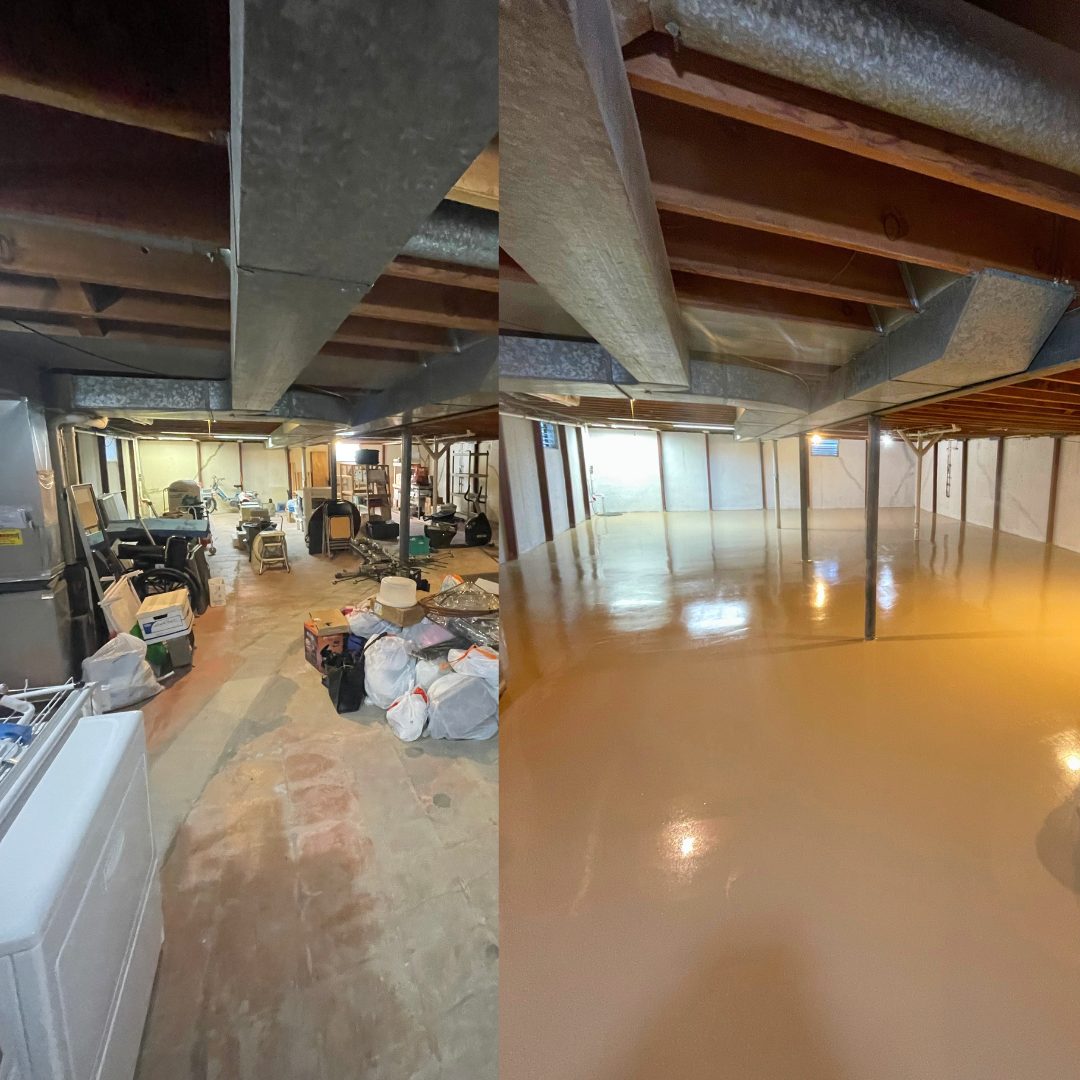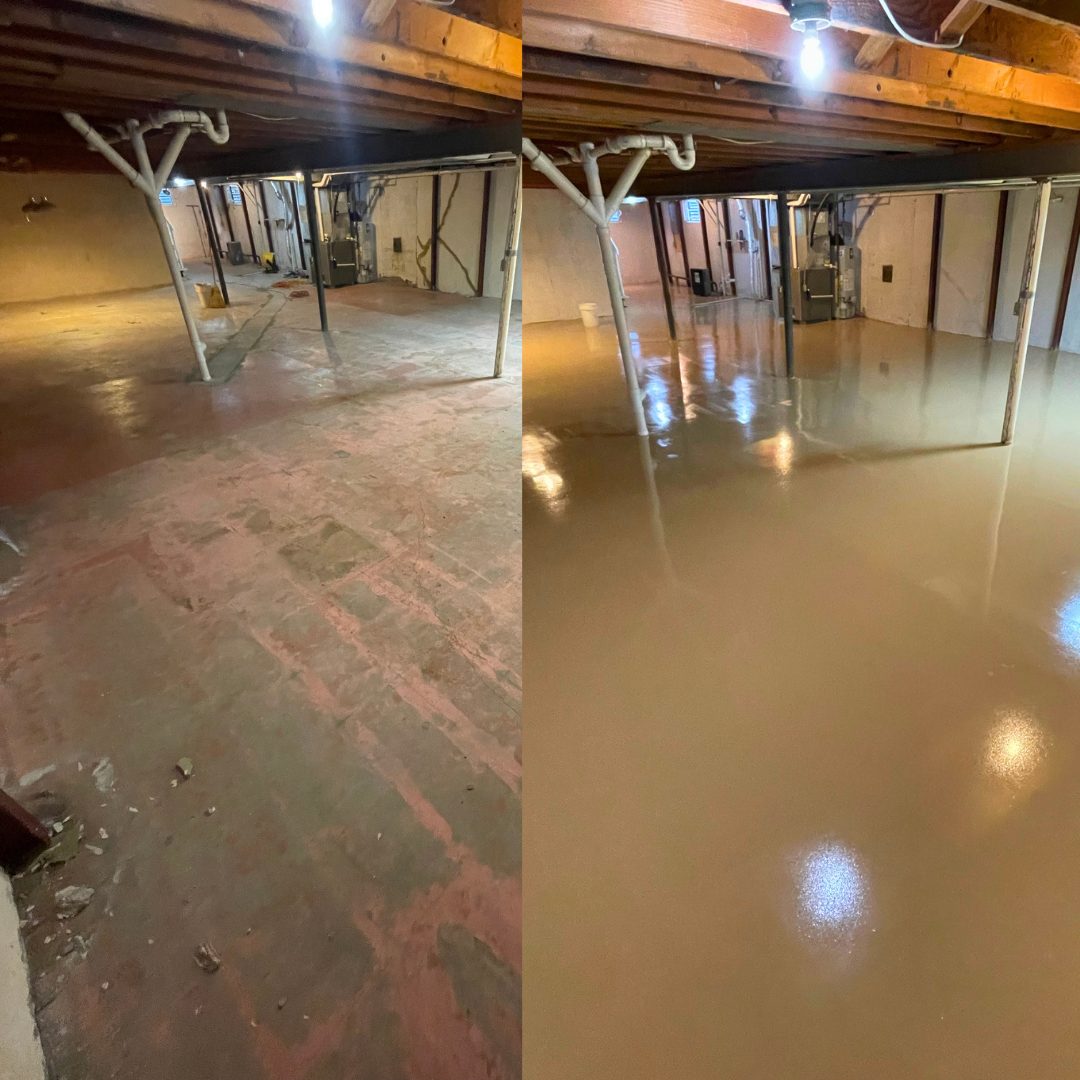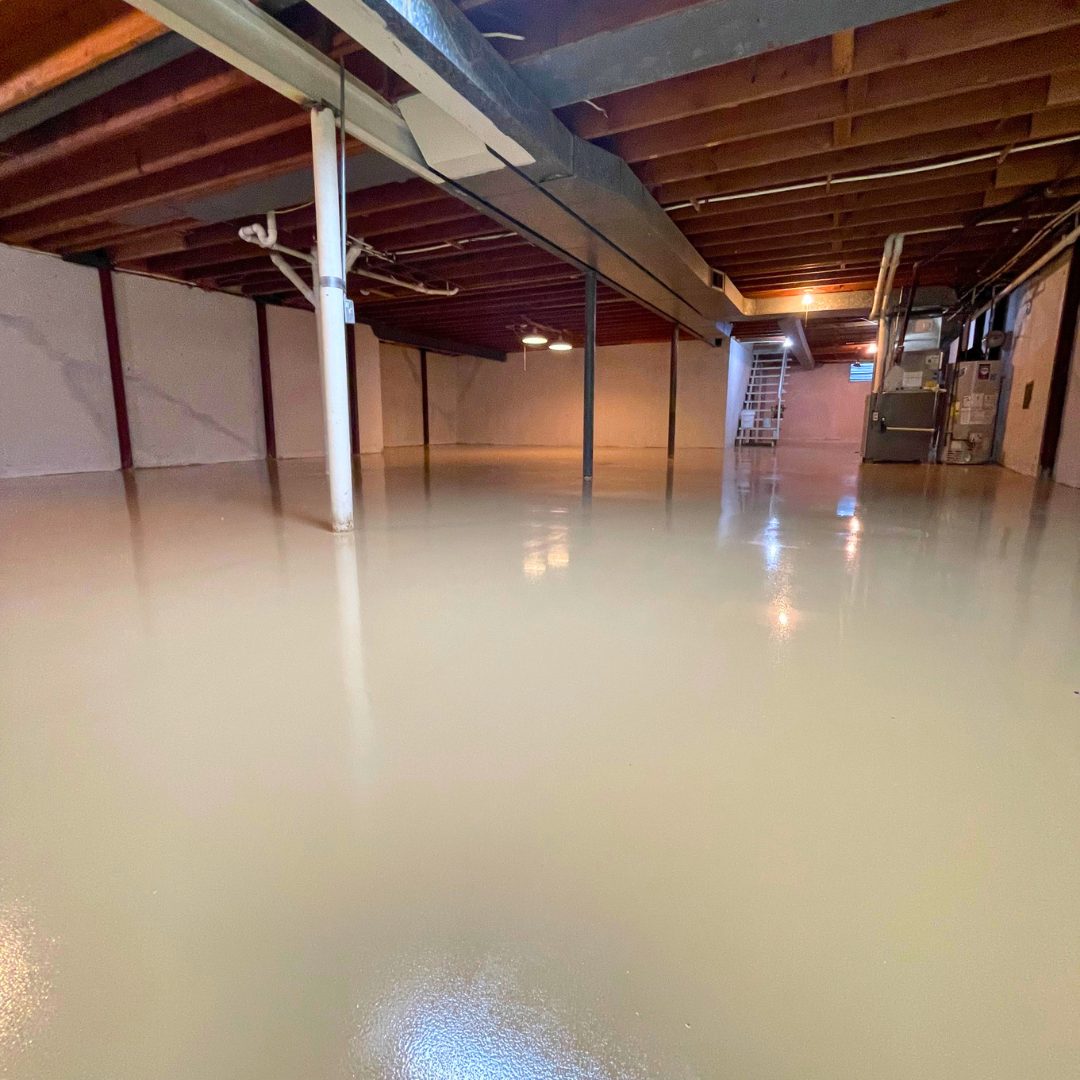
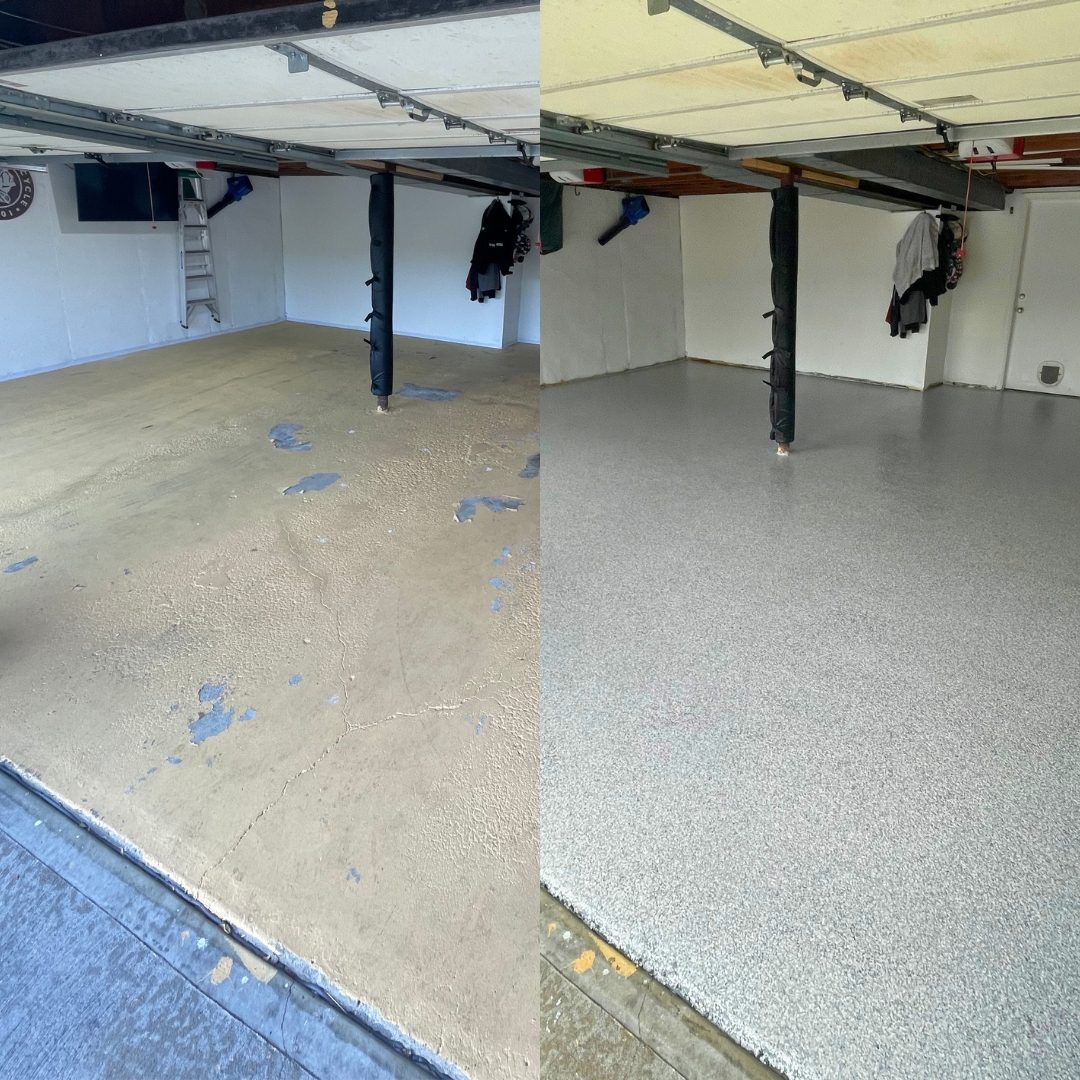
 Before & After
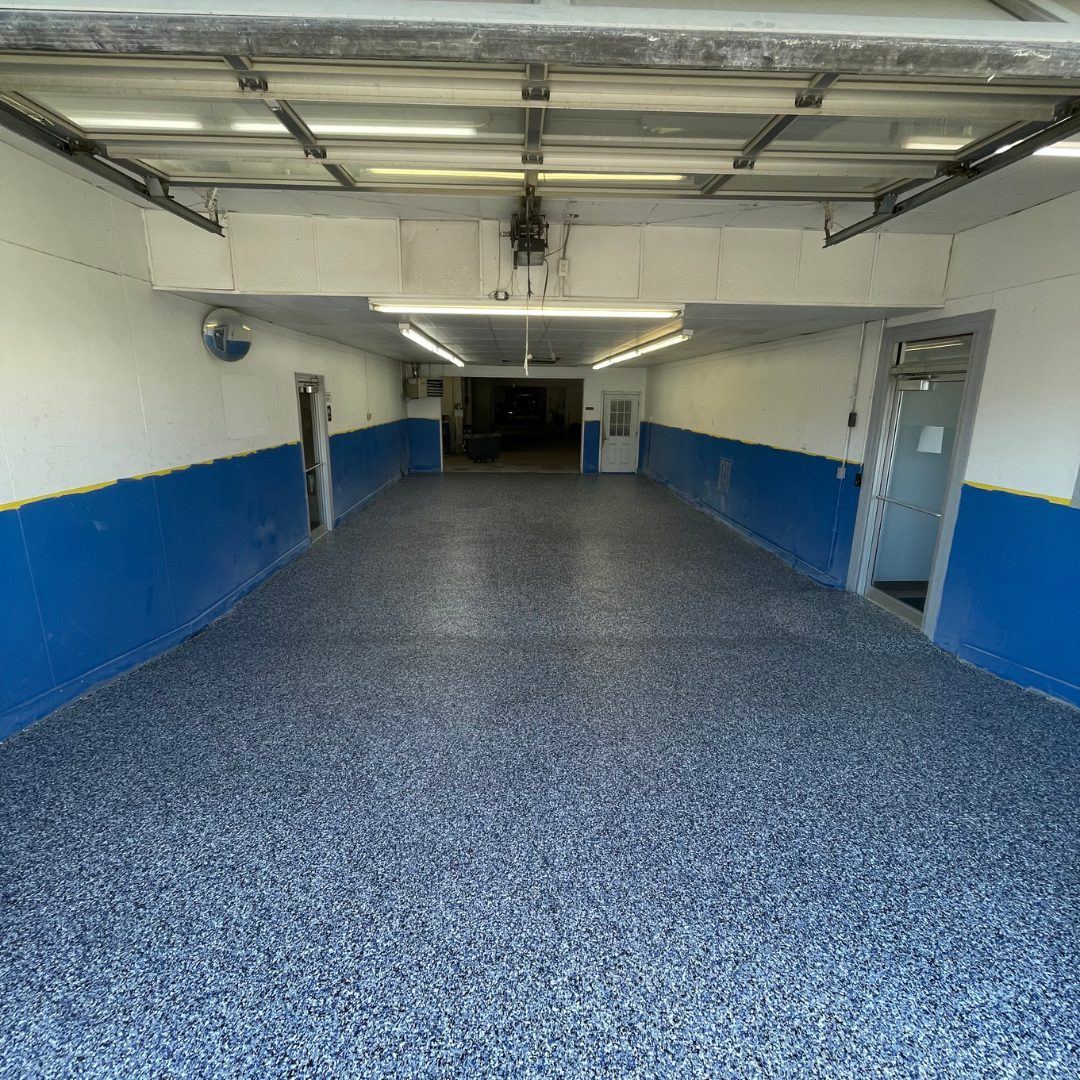
A Floor That Works As Hard As You Do
Plain concrete is porous. It drinks in oil, brake fluid, salt, and water, and once those stains soak in they are there for good. A flake coating seals the slab under a solid, bonded surface so spills sit on top where you can wipe them up.
This is not a paint and it is not a roll-on kit from the hardware store. It is a ground-and-bonded coating system built to take hot tires, foot traffic, and real abuse without peeling.
Why Coat Your Garage Floor
- Stops stains for good, oil, antifreeze, and salt sit on the surface instead of soaking into the concrete
- Handles hot tires, a proper flake system with a clear topcoat resists the tire-pickup that makes cheap coatings lift and peel
- Easy to clean, dust, dirt, and spills wipe or hose right off a sealed floor instead of grinding into bare concrete
- Brighter, safer space, the finish reflects light so the whole garage feels cleaner, and the flake adds grip underfoot
- Adds real value, a finished floor is one of the first things buyers notice in a garage or shop
How We Do It
The reason a floor coating lasts is the prep. Most failed garage floors were never ground, the coating was just rolled over a dirty slab and it peeled within a year. We do it the right way:
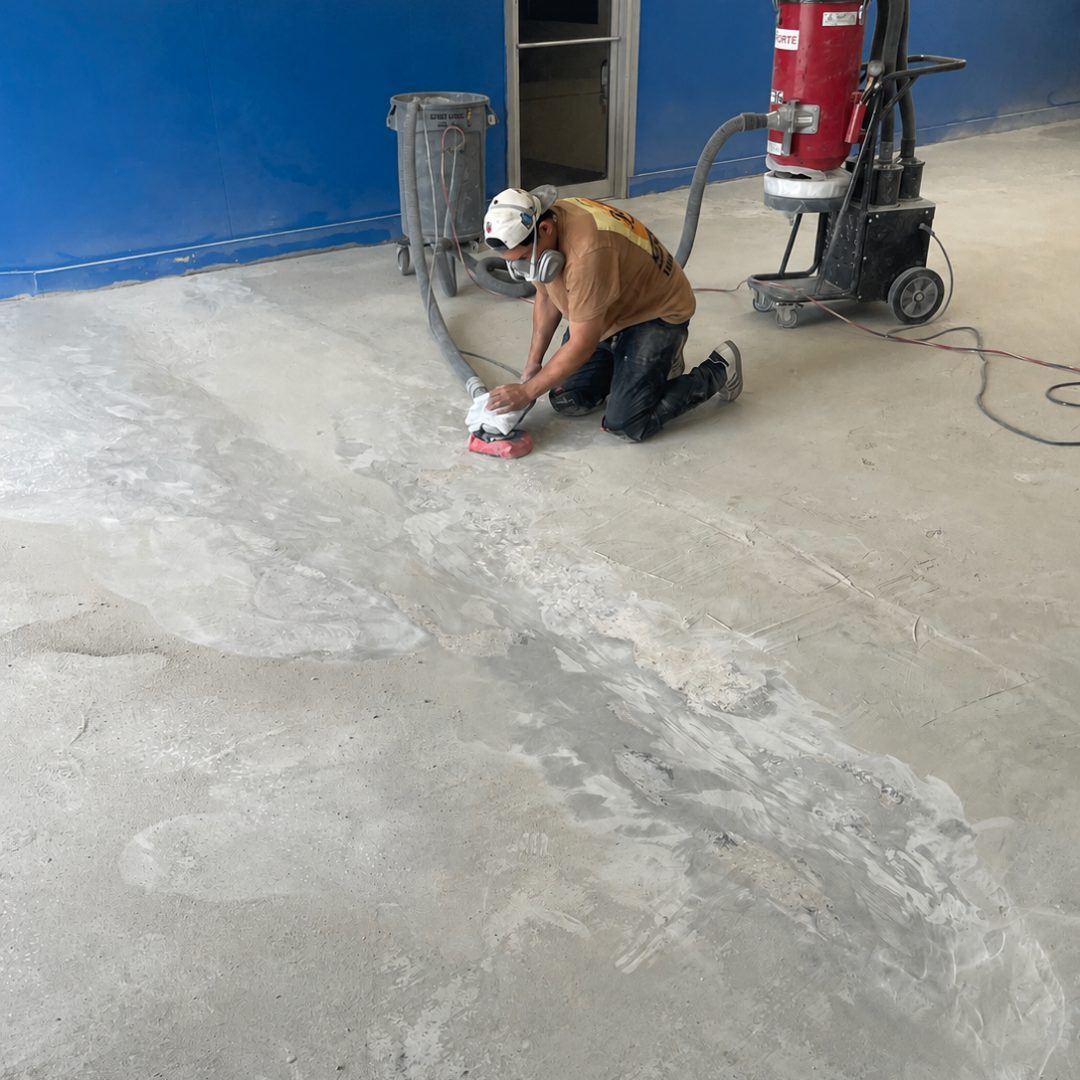
- Diamond grind the slab We mechanically grind the concrete down to a clean, open profile so the coating bonds into the surface, not just onto it. A HEPA vacuum runs the whole time to keep the dust contained.
- Repair and prep We fill cracks, chips, and pits and clean the floor down so there is nothing for the coating to fail over.
- Lay the base coat We apply the epoxy base across the whole floor as the foundation of the system.
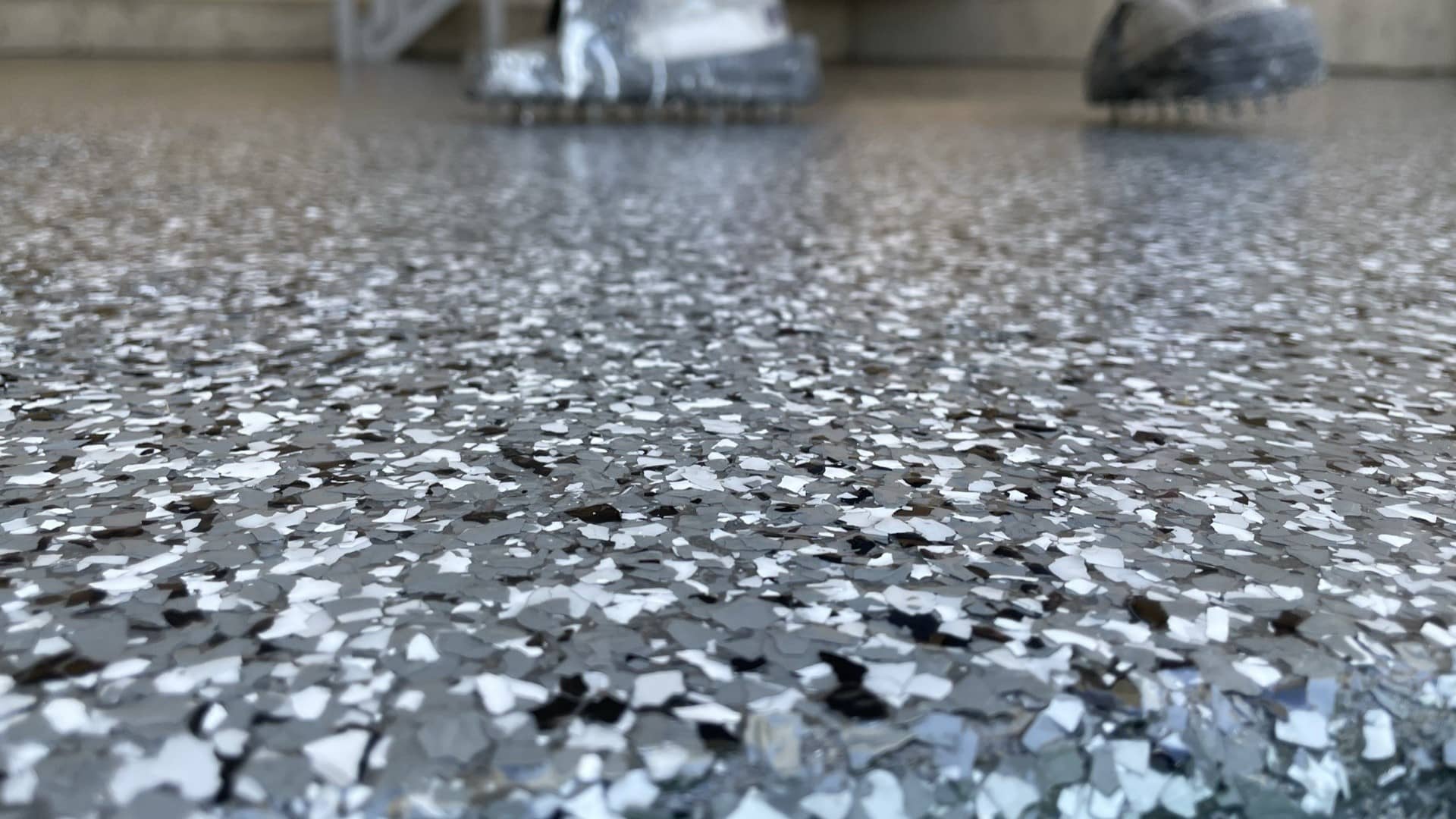
- Broadcast the flake We hand-broadcast color flake into the wet base across the entire floor for the finished look and added texture.
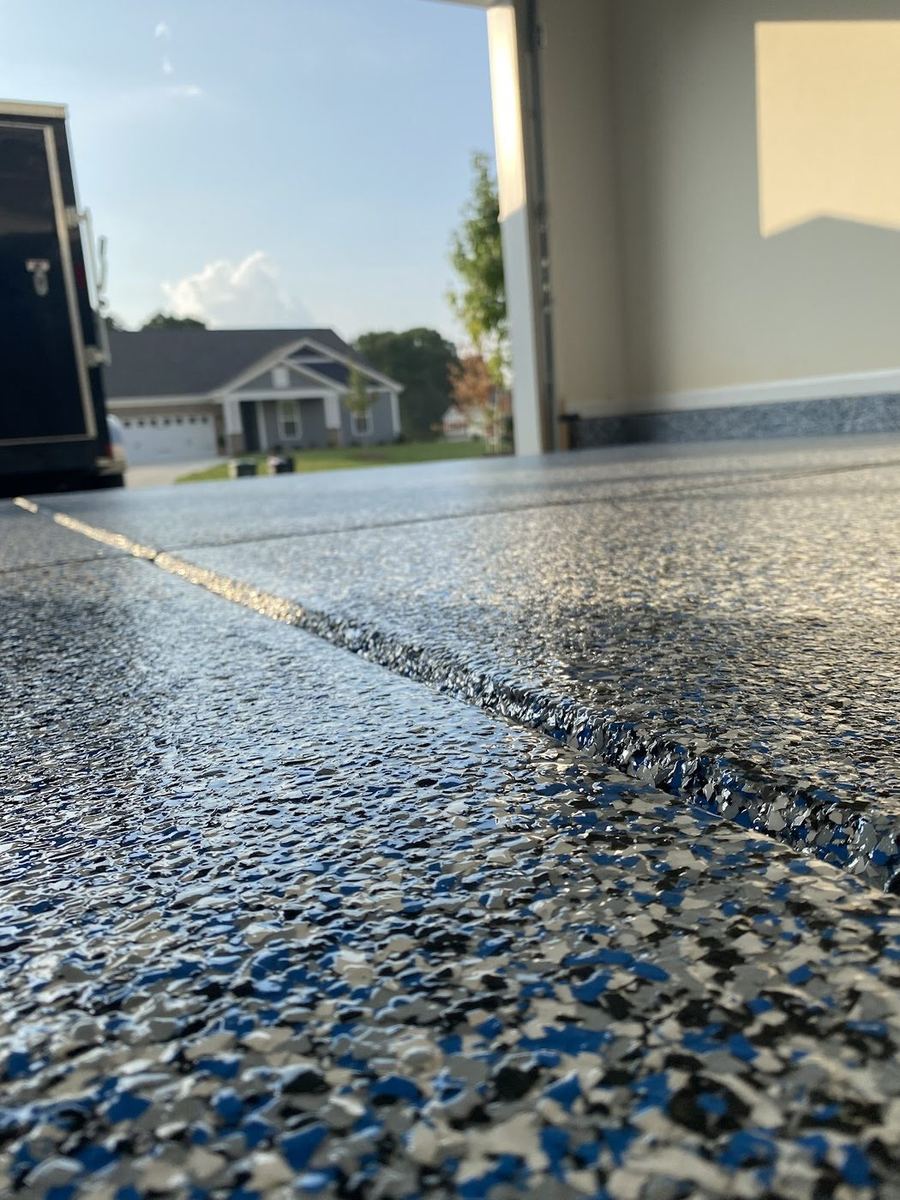
- Lock it in with a clear topcoat A tough clear topcoat goes over the flake to seal everything in and give you the durable, easy-clean surface that stands up to hot tires, oil, and traffic.
Ground, Not Just Painted
Diamond grinding is the step DIY kits and cheap installers skip. It is the single biggest reason a coating bonds for years instead of peeling in months.
Full-Flake Finish
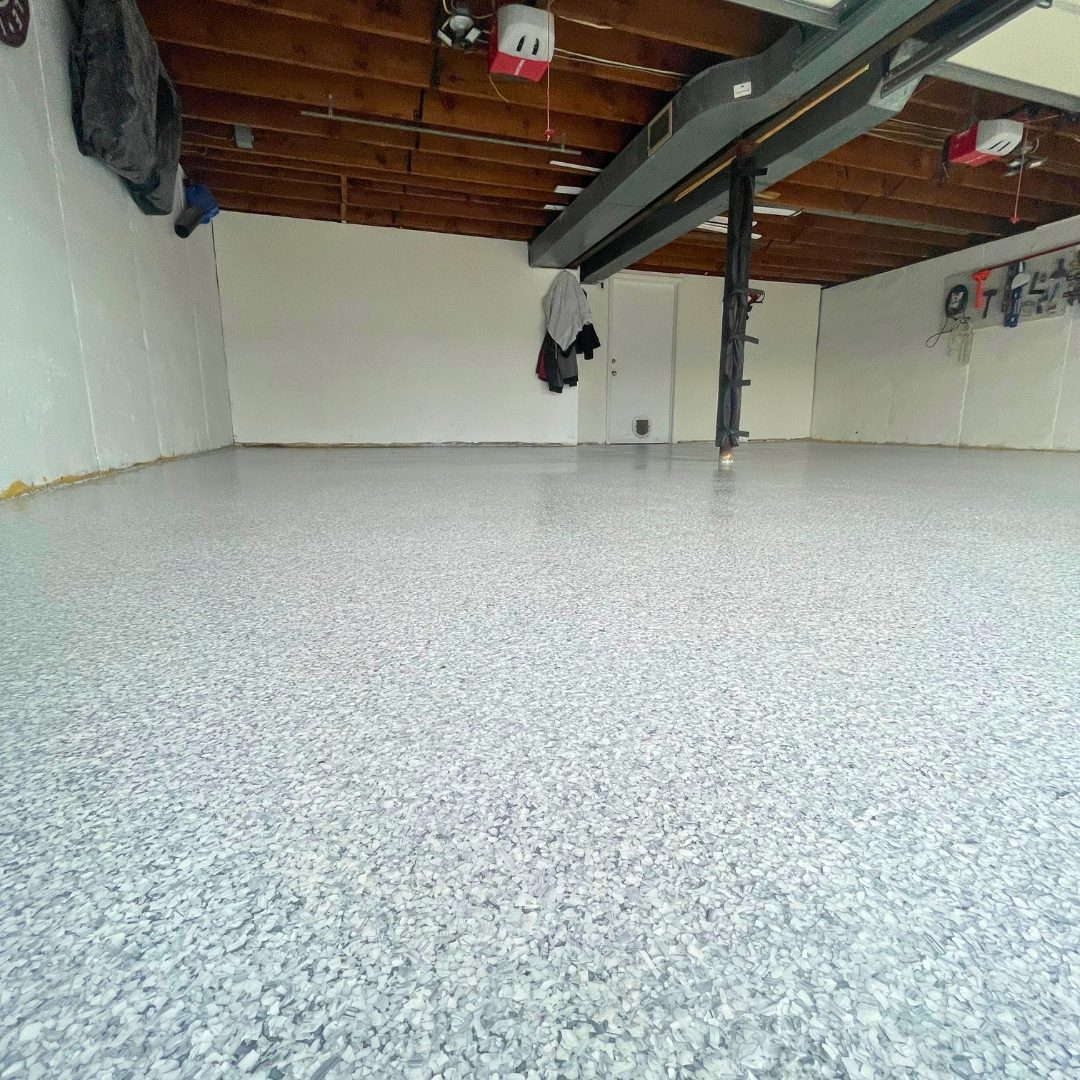
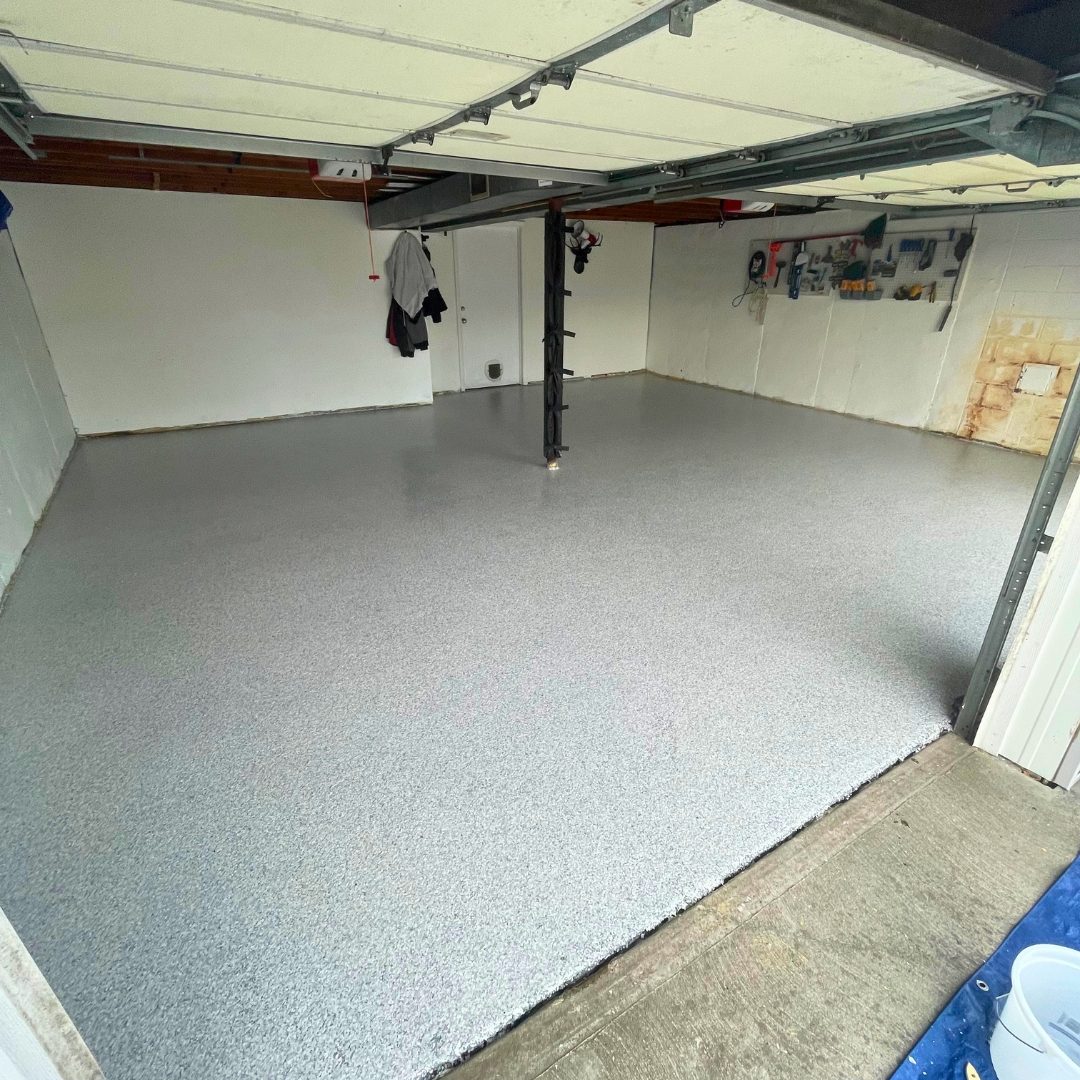
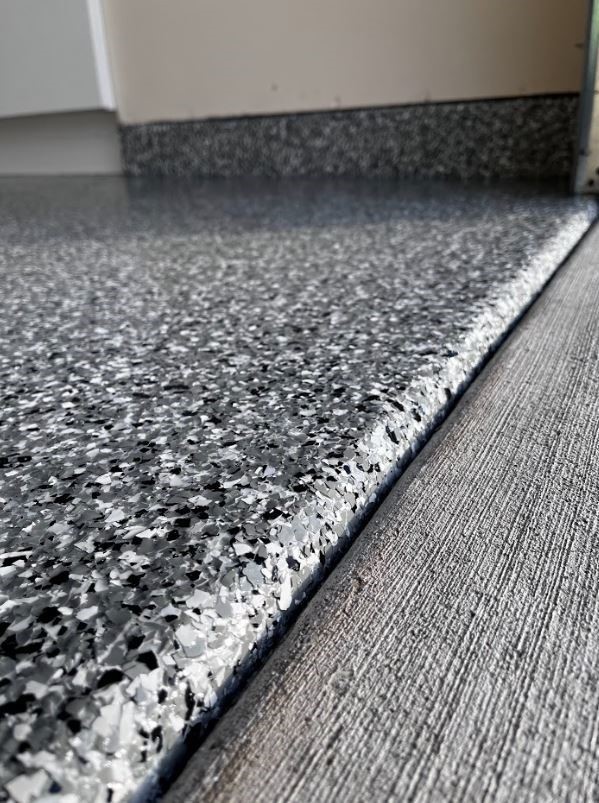
Color flake broadcast across the whole floor hides imperfections, adds grip, and gives that clean showroom look. Pick a blend that fits your space.
Built for KC Garages
Road salt, freeze-thaw, and hot summer tires are hard on a bare slab. A sealed, coated floor shrugs off the things that stain and pit Kansas City concrete.
Residential & Commercial
Home garages, basements, and patios, plus commercial floors like shops, warehouses, and dealership service bays. Same prep, same standard.
Epoxy or Polyaspartic? We Help You Pick
Most people call any flake floor an "epoxy floor," and that is fine. What actually matters is the topcoat we lock it in with. We offer two, and on your free quote we will tell you straight which one fits your floor and your budget. No upsell games.
Epoxy Flake System
The proven, great-value option. A full-flake floor finished with a durable clear topcoat. Handles everyday garage use, looks sharp, and comes in at a friendlier price. The right call for most home garages.
Polyaspartic Finish (1-Day)
The premium upgrade. A polyaspartic topcoat cures fast, so most floors are walk-ready the same day and ready to park on the next. It is also tougher against UV yellowing, scratches, and chemicals. Worth it if you want the most durable finish or need to be back in the garage quick.